Label Material Guide
Choose the Right Label Material by Surface, Environment & Look
Picking a label material comes down to a few questions — what surface it goes on, what environment it faces, how it should look and what it should cost. This guide walks through those factors, compares the main materials side by side, and points you to the right one, so you can match paper, film, vinyl or specialty stock to your product with confidence.
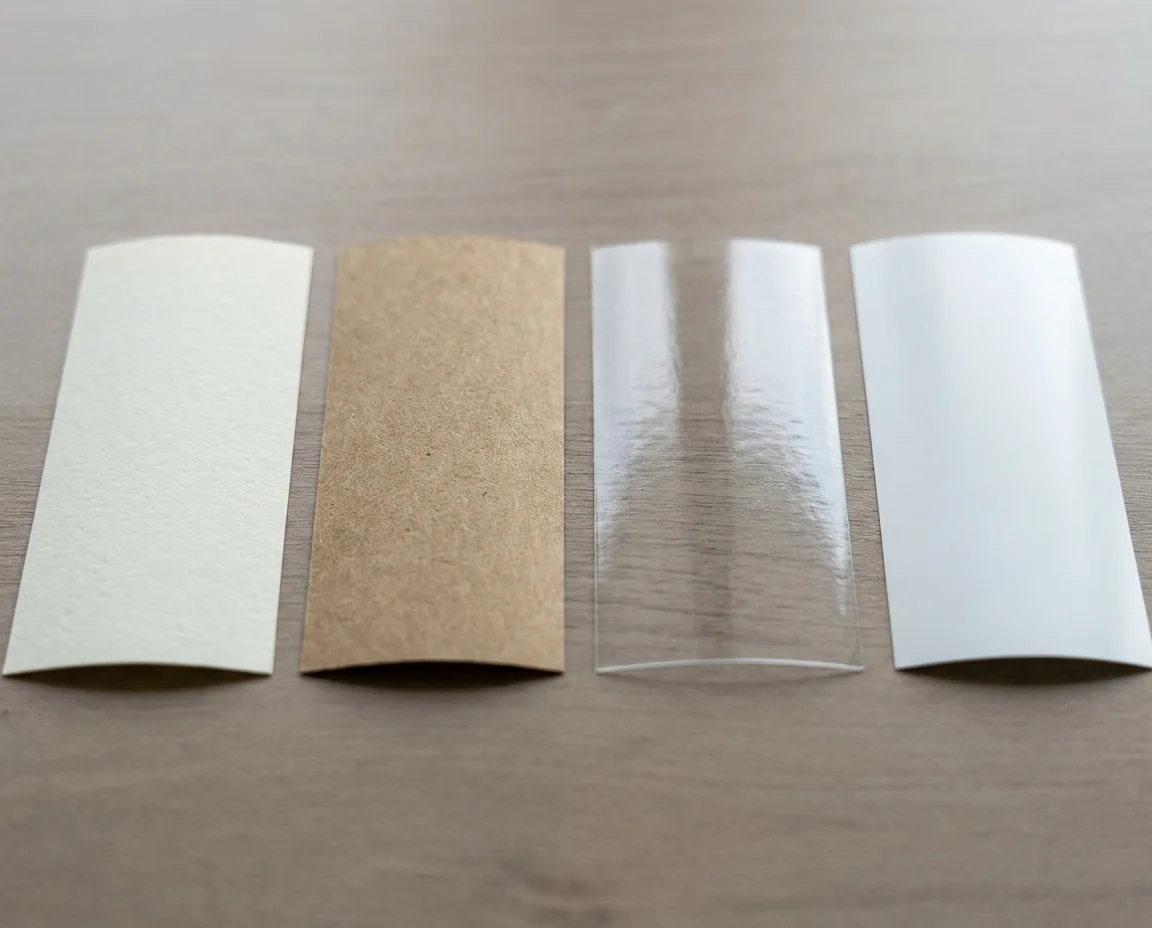
Answer three questions
How to Choose a Label Material
Four factors decide the right material — each one narrows the shortlist before you compare the matrix below.
Surface
Glass, plastic, metal, curved or paper changes which material and adhesive bond best — a curved squeeze tube needs a different film and tack than a flat glass jar.
Environment
Moisture, cold, oil, outdoor and chemicals decide whether you need film over paper — anything that gets wet, frozen or handled hard points to a BOPP, vinyl or polyester face.
Appearance
A natural, clear, metallic or holographic look points to different stocks and finishes — a no-label clear film, a kraft paper or a foil-stamped face all read very differently on shelf.
Budget
Paper is lower cost; film and specialty finishes add durability and impact — so balance where the label lives against how much shelf presence it needs.
Label Material Selection Matrix
Here is how the main label materials compare across water, oil, outdoor, cold, look and cost — follow a row to its page for the full detail.
| Material | Water | Oil | Outdoor | Cold | Look | Cost |
|---|---|---|---|---|---|---|
| Paper Coated & uncoated stock | Low | Low | Low | Low | Natural | Low |
| Kraft Paper Unbleached, artisan | Low | Low | Low | Low | Artisan | Low |
| White BOPP Durable film face | High | Good | Moderate | Good | Clean | Low |
| Clear BOPP No-label transparent | High | Good | Moderate | Good | No-Label | Low |
| Vinyl Flexible, conformable | High | Good | High | Good | Flexible | Medium |
| Polyester (PET) Chemical & industrial | High | High | High | High | Industrial | Higher |
Ratings are relative guidance — click any material to see its full page, or ask us to match one to your exact product.
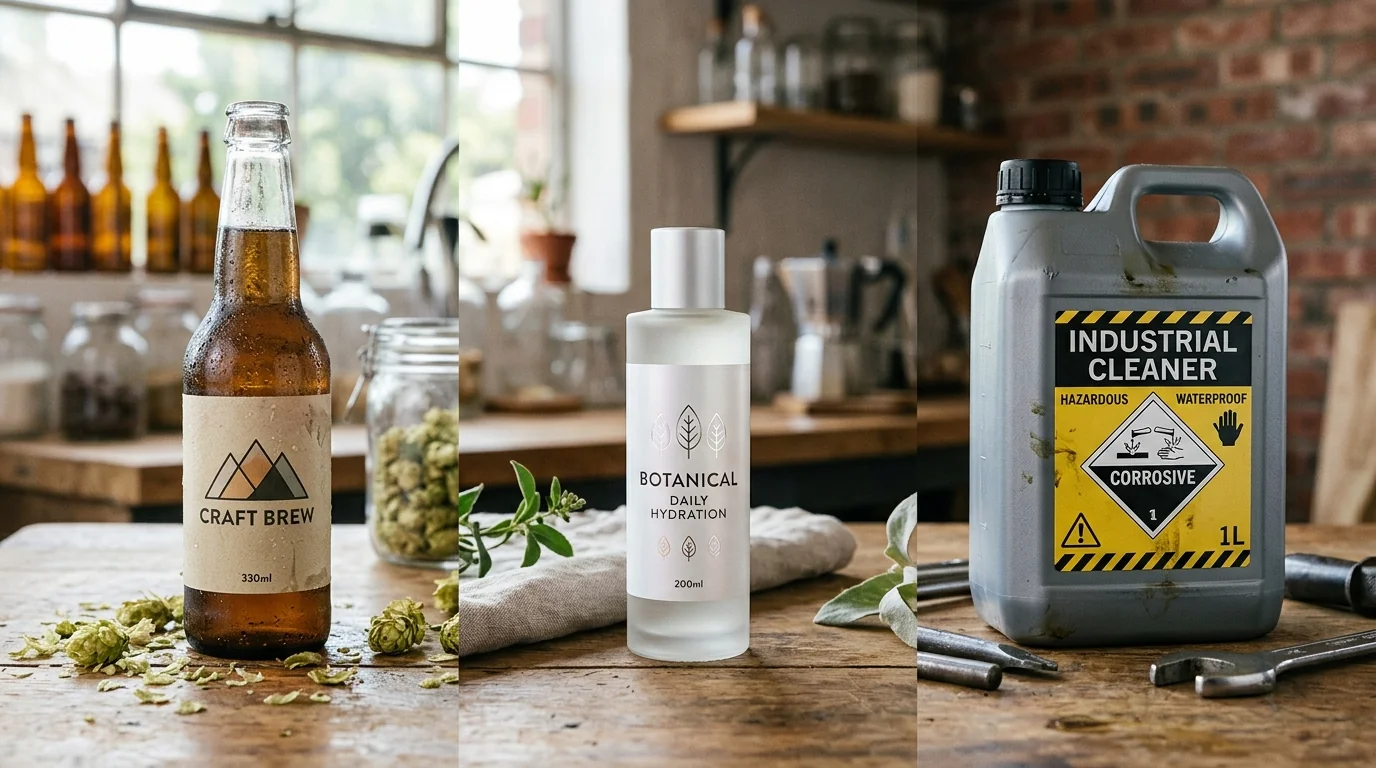
Choosing a Material by Environment
Start from what the label has to survive — the environment usually decides film vs paper before anything else.
Dry Indoor
For dry, indoor products where a natural, cost-effective look matters most, choose paper or kraft — there is no moisture to defend against.
Paper / KraftWet & Moisture
For bottles, jars and anything that gets wet or condensates, choose white or clear BOPP film so the label and print do not soften or lift.
White / Clear BOPPCold & Freezer
For refrigerated and frozen products, choose a BOPP or film face paired with a freezer-grade adhesive that bonds at low temperatures.
Film + Freezer AdhesiveOutdoor & UV
For outdoor exposure and sunlight, choose vinyl or polyester with UV-stable inks so color and adhesion hold up over time.
Vinyl / PolyesterChemical & Oil
For drums, solvents and oily, aggressive contact, choose polyester (PET) for the strongest resistance to chemicals and abrasion.
Polyester (PET)Not Sure?
Tell us the product and where it lives, and our team recommends the right material, adhesive and finish for the environment.
Get a RecommendationChoosing a Material by Surface
The container surface changes the best material and adhesive — a curved squeeze bottle and a flat carton need different builds.
Glass
For a no-label-look on glass jars and bottles, choose clear BOPP, or paper where a natural feel suits the brand.
Clear BOPP / PaperPlastic Bottle
For PET and HDPE bottles that get handled and wet, choose a white or clear BOPP film that resists moisture and scuffing.
White / Clear BOPPMetal
For tins, cans and metal drums, choose a film face with a high-tack adhesive that grips a smooth or coated metal surface.
Film + High-TackCurved & Squeeze
For squeeze tubes and tight curves, choose flexible vinyl that conforms and flexes with the container without wrinkling.
Conformable VinylPaper & Carton
For dry secondary packaging and cartons, choose paper labels — cost-effective and clean on kraft and coated board.
Paper LabelsAnother Surface?
Textured, powder-coated or unusual surfaces can need a specific adhesive — send us the substrate and we will match it.
Ask Our TeamAdhesive and Finish Quick Guide
Material is only part of the build — the adhesive and finish decide how the label bonds and how it reads.
Adhesives — When to Use
- PermanentUse for a lasting bond on most labels that stay on the product for its life.
- RemovableUse where labels must peel clean for returns, reuse or promotional swaps.
- Freezer-GradeUse on refrigerated and frozen products, where the adhesive must bond at low temperatures.
- Aggressive / High-TackUse to grip rough, oily and curved surfaces where a standard adhesive would lift.
Finishes — What They Add
- LaminationAdds protection and a matte or gloss look over the print, guarding it from scuffs and moisture.
- Foil, Emboss, Spot UV & Soft-TouchAdd premium shine and texture for shelf standout — see the premium label finishes page.
Why Brands Choose CNNLABEL for Material Guidance
A full material range and hands-on guidance to get the choice right the first time.
Full Material Range
Paper, film, vinyl, polyester, thermal and specialty stocks under one roof — so the right one is always in reach.
Adhesive & Finish Options
We build the whole label — adhesive and finish, not just the face stock — to match how it lives.
Material Guidance
We help match material to surface and environment, so you commit to a build that works.
Samples First
Evaluate materials and finishes in hand before you commit to a production run.
Test Before You Commit
Try a material at the standard 200 pc minimum before the whole range moves onto it.
Shipped Once the Build Is Settled
When the material, adhesive and finish are agreed, the run is produced and sent to your market.
Label Material FAQs
Start from your surface and environment, then appearance and budget — this guide and our team can match them for you.
BOPP for bottles and jars, vinyl for curves and outdoor, and polyester for chemical and industrial use.
Uncoated paper or kraft, for a matte, natural and writable face.
Vinyl or polyester with UV-stable inks and over-lamination, so color and adhesion hold up in sunlight.
A film face paired with a freezer-grade adhesive that bonds at low temperatures.
Paper labels for dry indoor use are the lowest-cost choice.
Yes. Material samples may be available to compare stocks and finishes before production.

Get Help Choosing Your Label Material
Tell us about your product, surface, environment and order quantity, and our team recommends the right material, adhesive and finish.